Benefits of Using Solar in Winters: A Complete Guide for Pakistan
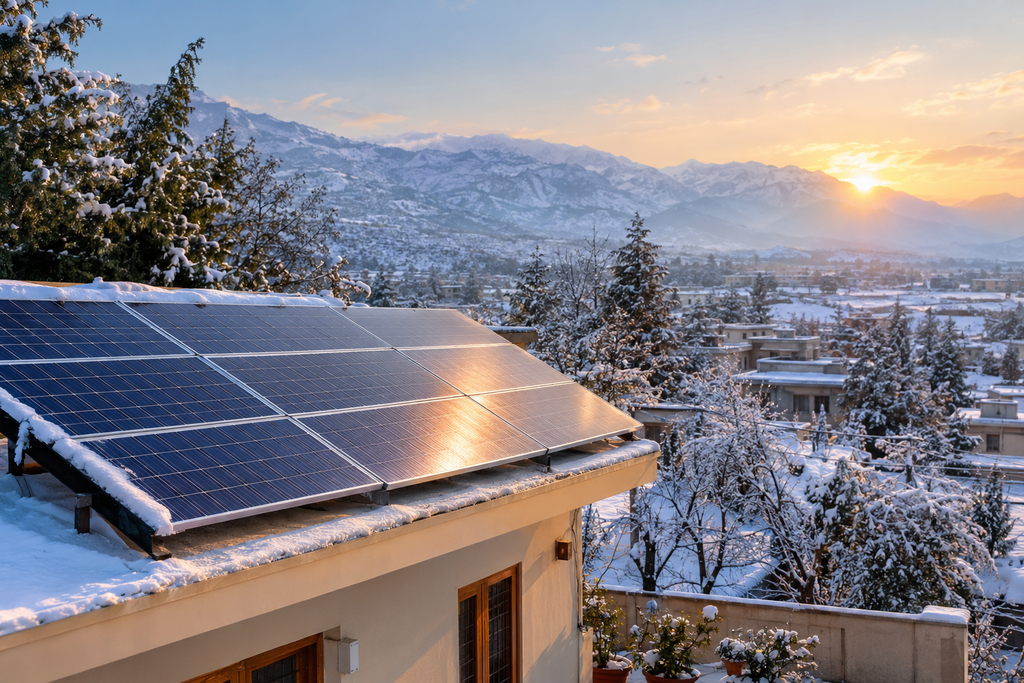
Many people in Pakistan associate solar energy with the long, sunny days of summer. However, solar panels can continue generating electricity throughout winter, making solar energy a practical solution for households and businesses looking to manage their electricity expenses throughout the year.
During winter, electricity consumption can change as people use more indoor lighting, electric water heaters, heating appliances, and other electrical equipment. At the same time, shorter daylight hours, fog, smog, and cloudy weather can influence solar energy production. Understanding how these factors affect a solar system helps homeowners make better decisions about installation, system capacity, battery storage, and maintenance.
One important advantage of solar panels is that they generate electricity from sunlight rather than relying on high temperatures. In fact, photovoltaic panels can operate more efficiently at cooler temperatures when adequate sunlight is available. Although winter production may be lower in some conditions, a properly designed solar system can continue delivering meaningful electricity savings.
For homeowners and businesses exploring solar energy solutions in Pakistan, winter is not a reason to overlook solar power. Instead, it is an opportunity to understand how the right solar setup can support long-term energy savings and electricity management.
1. Do Solar Panels Work in Winter?
Yes, solar panels work in winter because they convert sunlight into electricity. They do not require hot weather to generate power.
Solar panels use photovoltaic cells to convert sunlight into direct-current electricity. A solar inverter then converts this electricity into alternating current, which is used by most household and commercial appliances.
In Pakistan, winter solar performance varies by location. Cities such as Lahore, Islamabad, Faisalabad, and Multan experience different combinations of sunlight, fog, smog, and temperature throughout the season. These conditions influence the amount of electricity a solar system generates.
There are three important factors to understand:
-
Temperature: Solar panels generally operate more efficiently when their cells are cooler, provided sufficient sunlight is available.
-
Daylight duration: Shorter winter days mean fewer hours for electricity generation.
-
Weather conditions: Fog, smog, clouds, and shading can reduce the sunlight reaching the panels.
This means that cooler temperatures can improve panel efficiency, but total daily electricity production may still decrease when daylight hours are shorter or sunlight is limited.
With proper system design, panel placement, and regular maintenance, solar energy can remain a valuable electricity source throughout the winter season.
2. Major Benefits of Using Solar in Winters
2.1 Improved Solar Panel Efficiency in Cooler Temperatures
One of the key benefits of using solar in winter is that solar panels generally perform better electrically at lower operating temperatures than under extreme summer heat.
During hot summer days in Pakistan, rooftop solar panels can become significantly hotter than the surrounding air. Excessive cell temperatures can reduce their voltage and overall efficiency. In winter, cooler operating conditions can help panels convert available sunlight into electricity more efficiently.
However, efficiency and total energy production are different measurements. A panel may operate more efficiently in cooler weather while generating less electricity over the day because sunlight hours are shorter.
For homeowners considering solar panel installation, this distinction is important. A solar system should be designed according to the property's annual electricity consumption, roof conditions, geographical location, and expected seasonal production rather than summer performance alone.
2.2 Reduced Dependence on Grid Electricity
Electricity expenses remain an important concern for households and businesses in Pakistan. Solar panels can help reduce dependence on grid electricity by generating power during daylight hours.
During winter, solar-generated electricity can support everyday activities such as running refrigerators, computers, televisions, lighting, washing machines, and other compatible appliances. Businesses can also use solar energy for office equipment, lighting, and selected operational loads.
The amount saved depends on the solar system's capacity, daytime consumption, weather conditions, electricity tariff, and applicable billing arrangements.
For example, a household that operates several appliances during the day may use a greater proportion of its solar-generated electricity directly. This can reduce the amount of electricity purchased from the grid.
Choosing the appropriate solar system capacity is therefore essential. A correctly sized installation can help households manage electricity expenses without relying on unrealistic assumptions about how much power the panels will produce in every season.
2.3 Hybrid Solar Systems Can Provide Backup During Power Outages
Winter electricity requirements do not stop when the sun sets. Lighting, internet equipment, refrigerators, and other essential appliances may still need electricity during evening hours or unexpected power outages.
A hybrid solar system combines solar panels with a compatible inverter, battery storage, and, where available, grid electricity. During the day, solar panels can power connected loads and potentially charge the battery. When solar production decreases, stored electricity can supply selected loads, depending on the system configuration and available battery charge.
This makes a hybrid solar system worth considering for households that want both solar energy savings and backup capability.
Before choosing a system, homeowners should consider which appliances require backup, how long those appliances need to operate, and how much battery storage is appropriate.
It is also important to remember that a battery does not provide unlimited electricity. Its backup duration depends on battery capacity, usable charge, inverter limits, and the combined power consumption of connected appliances.
2.4 Better Management of Winter Electricity Consumption
Winter electricity consumption can differ significantly from summer usage. Families may spend more time indoors, operate additional lighting, and use electrical heating equipment.
A solar system can offset part of this consumption when electricity demand coincides with solar generation. However, appliances that consume large amounts of electricity, particularly electric heaters and water heaters, may require substantial power.
For this reason, it is important to calculate expected appliance loads before selecting a solar system. Homeowners should not assume that an existing system can operate every heating appliance without exceeding its capacity.
Energy-efficient appliances, sensible usage schedules, and appropriate system sizing can help improve the overall value of a solar installation.
For properties with higher evening electricity requirements, a battery-supported setup may be worth evaluating alongside other energy-management options.
2.5 Long-Term Electricity Savings Throughout the Year
Solar energy should be evaluated as a long-term investment rather than a solution designed exclusively for one season.
Although solar generation changes throughout the year, a well-designed system can produce electricity during both summer and winter. Over time, this generation can offset a portion of a property's electricity consumption and reduce its dependence on purchased grid electricity.
The financial benefit depends on several factors, including:
-
The total cost of installing solar panels.
-
The capacity and quality of the panels and inverter.
-
The property's annual electricity consumption.
-
The proportion of solar electricity used directly.
-
Battery costs, if you install storage.
-
Electricity tariffs and applicable grid-export or billing rules.
-
Cleaning, maintenance, and potential component replacement costs.
Understanding these factors provides a more realistic picture of the potential return on investment than relying on a single monthly bill or an advertised savings percentage.
Homeowners researching solar panel prices in Pakistan should compare complete system quotations, including equipment, installation, protection devices, warranties, and after-sales support.
2.6 Solar Energy Supports More Predictable Energy Planning for Businesses
For offices, shops, warehouses, educational institutions, and other commercial properties, electricity is an ongoing operating expense. Solar energy can help businesses offset part of their daytime electricity consumption while improving visibility into their long-term energy costs.
Winter can be a useful period to review electricity bills, identify daytime loads, and assess whether a solar installation matches the property's operating schedule.
Commercial solar system design requires particular attention to load requirements, available roof space, electrical infrastructure, and expected seasonal generation. Businesses with substantial daytime electricity consumption may be able to use a larger share of their solar generation directly.
The most suitable setup depends on the nature of the business. Some properties may benefit from a grid-connected system, while others may need battery storage or a hybrid configuration for selected critical loads.
Rather than selecting a system solely on its advertised capacity, businesses should evaluate expected energy production against actual consumption and operational needs.
2.7 Winter Is a Good Time to Review Solar Panel Maintenance
Solar panel performance depends not only on weather but also on the condition of the complete installation.
Dust, bird droppings, leaves, and other debris can accumulate on panels and reduce the sunlight reaching their surface. In parts of Pakistan where dust and smog are common, regular inspection and appropriate cleaning can help maintain performance.
Winter maintenance should include checking for visible dirt, examining accessible mounting structures, reviewing inverter alerts, and monitoring electricity generation. Electrical connections and other technical components should be inspected by qualified professionals when necessary.
Fog and moisture may also affect visibility and surface conditions, while shaded panels can experience lower production during the shorter winter days. Keeping the system in good condition helps ensure that available sunlight is used effectively.
Homeowners should follow the manufacturer's cleaning and maintenance guidance. Panels should not be cleaned with unsuitable chemicals, abrasive materials, or unsafe methods. Electrical equipment should never be handled without the appropriate qualifications.

3. Factors That Affect Solar Panel Performance During Winter
Although solar energy remains useful in winter, several conditions influence the amount of electricity a system can generate.
3.1 Shorter Daylight Hours
Winter days are generally shorter than summer days. As a result, solar panels have fewer hours available to generate electricity.
This can reduce total daily energy production even when the panels operate efficiently in cooler temperatures.
3.2 Fog and Smog in Pakistani Cities
Fog and smog can reduce the amount of sunlight reaching solar panels. Their effect varies according to local weather, atmospheric conditions, and the duration of reduced visibility.
For example, a solar system in Lahore may experience different winter production patterns from a system in another region. Actual output should therefore be evaluated using local weather conditions and the property's historical or estimated solar resource.
3.3 Cloud Cover
Cloudy weather reduces the sunlight reaching the panels, but it does not necessarily stop electricity generation entirely. Solar panels can still produce electricity under diffuse daylight, although output may be lower than under clear skies.
3.4 Panel Orientation and Shading
Panel orientation, tilt, nearby buildings, trees, and rooftop structures all affect solar production. Because the sun's position changes throughout the year, system design should account for seasonal sunlight and potential shading.
Professional site assessment can help determine a suitable panel arrangement for the available roof space.
3.5 System Capacity and Inverter Performance
The number of panels, their rated output, inverter capacity, system configuration, and electrical losses all influence the electricity available to a property.
A system that is too small may struggle to meet household requirements, while an incorrectly configured system may not use available solar generation effectively.
Before installation, it is advisable to assess actual electricity bills and identify the property's essential loads, daytime consumption, and backup requirements.
4. How to Improve Solar System Performance in Winter
Solar system owners can take several practical steps to maintain performance during colder months.
Keep Solar Panels Clean
Inspect panels for dust, bird droppings, and other debris. Clean them when necessary, following manufacturer guidance and appropriate safety precautions. Avoid climbing onto rooftops or handling electrical equipment without suitable training and protection.
Monitor Electricity Generation
Review the inverter display or monitoring application, if available. Comparing daily and monthly generation can help identify unexpected changes in performance.
Remember that winter output should be compared with similar weather conditions and seasonal expectations rather than with peak summer production.
Check for New Sources of Shade
Trees, rooftop additions, water tanks, and nearby structures can cast shadows on solar panels. Inspect the installation for shading that may have developed or become more significant as the sun's position changes.
Review Battery Storage Requirements
If your property experiences power outages or has significant evening electricity consumption, assess whether the existing battery capacity is sufficient. Battery storage should be selected according to essential loads, required backup duration, usable capacity, and budget.
Use Electricity More Strategically
Where practical, operate suitable appliances during daylight hours to make better use of solar-generated electricity. High-power appliances should only be used when the solar system and electrical installation are designed to support their demand.
Arrange Professional Inspections
If your system produces substantially less electricity than expected, displays inverter warnings, or shows signs of physical damage, arrange an inspection by a qualified solar technician.
Regular monitoring and appropriate maintenance can help identify problems before they lead to extended production losses.

5. Is a Hybrid Solar System Better for Winter?
A hybrid solar system may be a suitable choice for households that want to reduce grid electricity consumption while maintaining backup power for selected appliances.
Unlike a conventional grid-connected system without battery storage, a hybrid setup can store surplus solar energy when the system and battery settings permit. That stored energy can then be used when sunlight is insufficient or the grid supply is interrupted.
However, the best system depends on the property's requirements.
A grid-connected solar system may be suitable for households focused primarily on reducing daytime electricity costs. A hybrid system may be preferable when backup power is also important. An off-grid system requires more careful planning because it must meet electricity requirements without relying on the grid.
Before choosing a hybrid solar system, consider:
-
Daily and seasonal electricity consumption.
-
The appliances that must operate during outages.
-
Required battery backup duration.
-
Solar panel and inverter capacity.
-
Available installation space.
-
Total installation and battery replacement costs.
-
Compatibility with the property's electrical infrastructure.
Battery storage can improve flexibility, but it adds to the initial investment. The decision should be based on actual electricity requirements rather than the assumption that every household needs the same system.
6. Understanding Solar Panel Prices and Installation in Pakistan
Solar panel prices in Pakistan depend on equipment specifications, brand, availability, system capacity, inverter type, mounting requirements, and installation complexity. Battery storage can add substantially to the overall cost of a hybrid or off-grid setup.
When comparing quotations, homeowners should look beyond the price of the panels alone. A complete quotation should explain the proposed system capacity, inverter specifications, mounting structure, wiring, protection equipment, installation work, warranties, and after-sales support.
It is also important to distinguish between a system's rated capacity and its actual electricity production. A solar system's output changes with sunlight, temperature, shading, equipment condition, and seasonal weather.
The most appropriate system size should be based on electricity consumption and a realistic assessment of expected production throughout the year.
For properties in Lahore and other Pakistani cities, a professional site assessment can help determine the suitability of the roof, potential shading, electrical requirements, and an appropriate installation design.
7. Is Winter a Good Time to Install Solar Panels?
Winter can be a suitable time to plan or install a solar system. There is no need to wait until summer simply because solar panels are often associated with hot, sunny weather.
Installing a system during winter may allow homeowners to begin generating electricity before the higher-demand summer season arrives. It can also provide an opportunity to review electricity consumption, assess rooftop conditions, and plan the installation without making a rushed decision during peak summer demand.
The actual installation timeline depends on weather, equipment availability, site conditions, and the installer's schedule.
Before proceeding, homeowners should confirm the expected system capacity, installation scope, safety provisions, equipment warranties, and applicable utility requirements.
Most importantly, a system should be designed for the property's longer-term electricity needs rather than for winter or summer alone.

8. Why Professional Solar Installation Matters
The performance and reliability of a solar system depend on more than the panels themselves. Correct system sizing, suitable equipment, safe electrical connections, proper mounting, and appropriate inverter configuration all contribute to the final result.
An experienced solar installation provider can assess electricity consumption, available roof space, shading, and backup requirements before recommending a suitable configuration.
Professional planning can also help avoid common problems such as undersized systems, incompatible components, inadequate electrical protection, and unrealistic expectations about energy production.
For homeowners and businesses exploring solar energy in Lahore, choosing a provider that explains the system design, expected seasonal performance, warranties, and maintenance requirements can make the investment easier to evaluate.
Frequently Asked Questions
Do solar panels work during winter in Pakistan?
Yes. Solar panels continue generating electricity during winter as long as sunlight is available. Actual production depends on daylight hours, fog, smog, cloud cover, panel orientation, shading, and system condition.
Are solar panels more efficient in winter?
Solar panels generally operate more efficiently at cooler cell temperatures than at very high temperatures. However, shorter days and reduced sunlight can lower total winter electricity generation.
Can solar panels generate electricity on cloudy winter days?
Yes. Panels can generate electricity from diffuse daylight, although output is usually lower than under clear, sunny conditions. The amount generated depends on cloud thickness, available daylight, and system characteristics.
Can a solar system run a heater during winter?
It depends on the heater's power consumption, the solar system's capacity, available sunlight, and other connected loads. Electric heaters can consume substantial electricity, so the system should be sized and configured carefully before using them.
Is a hybrid solar system useful during winter?
A hybrid solar system can combine solar generation, battery storage, and grid electricity. It may provide backup for selected appliances during outages, but backup duration depends on the battery's usable capacity and the connected loads.
Does solar panel maintenance matter in winter?
Yes. Dirt, debris, shading, and equipment faults can reduce performance throughout the year. Regular monitoring and appropriate cleaning help maintain generation, while technical inspections should be handled by qualified professionals.
Should I install solar panels before summer?
Winter can be a suitable time to plan or install solar panels. A correctly designed system can generate electricity in every season, although production varies with weather and daylight hours.
How can I estimate the right solar system size for my home?
Start by reviewing electricity bills, identifying daytime and evening consumption, listing essential appliances, and determining whether battery backup is required. A site assessment can then help establish an appropriate system capacity and configuration.
Conclusion: Make Solar Energy Work Throughout the Year
The benefits of using solar in winters extend beyond cooler operating temperatures. Solar panels can continue generating electricity, reduce dependence on grid power, support daytime household and business activities, and contribute to long-term electricity savings.
However, realistic expectations are essential. Shorter days, fog, smog, cloud cover, and increased electricity demand can influence winter performance. The right approach is to select a system based on actual consumption, local conditions, suitable equipment, and expected year-round generation.
For households and businesses in Pakistan, solar energy is best viewed as a long-term energy solution rather than a seasonal investment. With appropriate installation, monitoring, and maintenance, a solar system can continue delivering value throughout the year.
If you are considering solar for your home or business, explore the solutions available through EcoCart Energy and evaluate which system best suits your electricity requirements, property, and long-term energy goals.