Commercial Solar in Pakistan: A Practical Guide for Businesses, Factories & Industrial Facilities
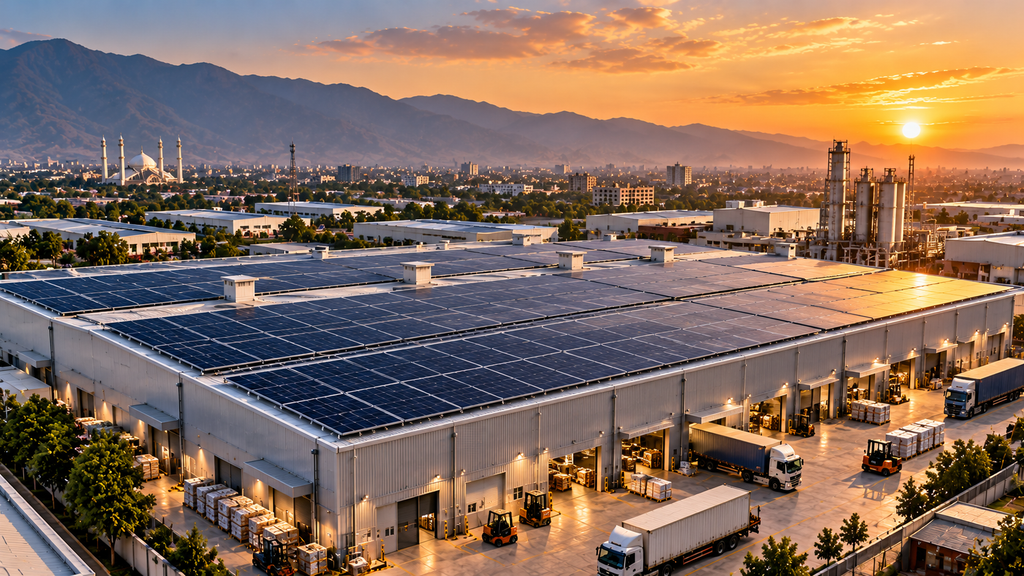
For businesses in Pakistan, electricity is more than a monthly expense. It directly affects operating costs, production, working hours, and long-term profitability.
As electricity costs continue to influence business planning, more companies are evaluating commercial solar in Pakistan as a way to generate their own electricity, reduce dependence on the grid, and improve control over energy expenses.
However, installing solar for a business is very different from putting panels on a residential rooftop.
A commercial solar system needs to be designed around the company's electricity consumption, operating hours, load profile, available roof or land area, electrical infrastructure, and future energy requirements.
For offices, factories, warehouses, retail stores, restaurants, schools, hospitals, and industrial facilities, the right solar solution can become an important part of long-term energy management.
What Is Commercial Solar?
Commercial solar refers to a solar power system designed to meet the electricity requirements of a business or commercial facility.
Depending on the property's size and energy requirements, a commercial solar installation can range from a relatively small rooftop system to a large-scale solar plant measured in hundreds of kilowatts or multiple megawatts.
A complete commercial solar solution may include:
- Solar panels
- Solar inverters
- Mounting structures
- DC and AC cabling
- Electrical protection equipment
- Monitoring systems
- Battery storage where required
- Engineering and system design
- Installation and commissioning
- Grid interconnection
- Applicable net-metering or prosumer support
The important point is that commercial solar should be treated as an engineered energy solution, rather than simply a purchase of solar panels.
Why Are Businesses in Pakistan Switching to Solar?
Electricity is a significant operating expense for many businesses.
A factory may operate heavy machinery throughout the day. A restaurant may rely on refrigeration, air conditioning, kitchen equipment, and lighting. An office may have computers, HVAC systems, elevators, and other electrical loads running for several hours every day.
This makes electricity consumption an important part of the overall cost structure.
A properly designed commercial solar system can help businesses:
Reduce Dependence on Grid Electricity
Solar generation can supply a portion of the property's electricity requirements during daylight hours.
This can reduce the amount of electricity that needs to be purchased from the grid, depending on the system design and the property's consumption pattern.
Improve Energy Cost Predictability
Electricity costs can make long-term business planning difficult.
Generating part of your electricity through solar can provide greater control over a portion of the company's energy requirements.
Make Better Use of Rooftop or Land Space
Large commercial buildings, warehouses, factories, and industrial facilities often have significant roof or land areas that can potentially be used for solar generation.
A professional site assessment can determine whether that space is suitable for a solar installation. Eco Cart's Solar EPC service includes site assessment and customized system design.
Support Long-Term Business Planning
A solar project is a long-term infrastructure investment.
Businesses can evaluate expected energy generation, operating costs, equipment warranties, maintenance requirements, and potential savings as part of their broader financial planning.
Which Businesses Can Benefit From Commercial Solar?
Commercial solar is not limited to one type of business.
Depending on their electricity consumption and available installation area, solar can be considered by:
- Offices
- Factories
- Warehouses
- Retail stores
- Shopping centers
- Restaurants
- Hotels
- Schools
- Hospitals
- Corporate buildings
- Workshops
- Agricultural facilities
- Manufacturing plants
- Industrial units
The ideal system size and configuration will vary significantly between these properties.
For example, an office may have its highest electricity consumption during working hours, while a manufacturing facility may operate machinery throughout multiple shifts.
That difference matters when designing the system.

How Is a Commercial Solar System Designed?
A professional commercial solar project should begin with an assessment rather than a standard package.
1. Electricity Consumption Analysis
The first step is understanding how much electricity the business actually uses.
Historical electricity bills can provide useful information about:
- Monthly consumption
- Seasonal changes
- Peak demand
- Existing electricity costs
- Daytime consumption
- Overall load requirements
However, the electricity bill alone may not provide the complete picture.
A detailed load assessment can provide a better understanding of how the facility actually consumes electricity.
2. Daytime Load Assessment
Solar panels generate electricity during daylight hours.
Therefore, understanding when a business uses electricity can be just as important as understanding how much electricity it consumes.
A facility with substantial daytime consumption may be able to directly use a significant portion of its solar generation.
This can influence the overall system design and financial analysis.
3. Roof or Land Assessment
The available installation area needs to be evaluated before finalizing system capacity.
The assessment may consider:
- Available roof area
- Roof condition
- Shading
- Orientation
- Structural requirements
- Access for installation
- Maintenance access
- Potential future construction
For ground-mounted systems, additional factors such as land availability, site conditions, access, and electrical infrastructure also need to be considered.
4. Electrical Infrastructure
Commercial and industrial facilities can have significantly more complex electrical systems than residential properties.
Depending on the project, engineers may need to evaluate:
- Main distribution boards
- Transformers
- Three-phase electrical systems
- Cable routes
- Protection equipment
- Existing generation equipment
- Load distribution
- Grid connection requirements
This is one reason why commercial solar projects should be handled by experienced engineering teams.
5. Solar System Design
Once the site's requirements are understood, the solar system can be designed around the property's actual needs.
This can include selecting:
- Solar panel capacity
- Inverter capacity
- Number and configuration of panels
- Mounting structure
- Electrical protection
- Cabling
- Monitoring
- Battery storage, if required
The objective is not simply to install the largest possible solar array.
The objective is to design a system that works efficiently with the property's energy consumption and infrastructure.
On-Grid vs Hybrid Solar for Businesses
One of the most important decisions for a commercial solar project is choosing the appropriate system configuration.
On-Grid Commercial Solar
An on-grid solar system is connected to the electricity grid.
During daylight hours, solar electricity can be used by the facility. Depending on the system and applicable regulations, surplus electricity may be exported to the grid.
On-grid systems can be attractive for businesses whose primary objective is reducing electricity costs and who have substantial daytime consumption.
They generally do not provide conventional battery backup during a grid outage.
Hybrid Commercial Solar
A hybrid system combines solar generation with battery storage and grid electricity.
This configuration can provide additional flexibility for businesses that require backup power or want greater control over how solar energy is stored and used.
A hybrid commercial system may be considered when a business has critical loads that need to remain operational during interruptions.
Battery capacity, however, should be determined according to the actual loads requiring backup.
There is no benefit in installing an unnecessarily large battery simply because more storage sounds better.
Businesses looking for commercial hybrid equipment can also explore Eco Cart's solar inverters and energy-storage products.
Why Solar System Size Should Not Be Chosen From a Package
One of the most common mistakes businesses can make is selecting a solar system based solely on a standard package.
For example, two factories may have similar monthly electricity bills but completely different operating patterns.
One may consume most of its electricity between 9 AM and 6 PM.
Another may operate machinery throughout the night.
The two businesses may therefore require different solar configurations even if their annual electricity consumption is similar.
A proper commercial solar assessment should consider:
Electricity consumption + operating hours + load profile + available space + electrical infrastructure + future requirements
rather than simply choosing a popular system size.

What Equipment Matters in a Commercial Solar System?
Solar panels receive most of the attention, but a commercial system consists of many interconnected components.
Solar Panels
The solar panels determine how sunlight is converted into DC electricity.
Businesses should consider panel efficiency, technology, warranty, physical dimensions, degradation characteristics, and suitability for the installation environment.
Solar Inverter
The inverter is one of the most important components of the system.
It converts the DC electricity produced by the solar panels into usable AC electricity and, depending on the system configuration, can manage grid interaction and battery storage.
For commercial projects, inverter selection should consider capacity, efficiency, MPPT configuration, monitoring, protection, warranty, and compatibility with the facility's electrical system.
Eco Cart also offers commercial and industrial solar inverter options for different system requirements.
Mounting Structure
The mounting structure supports the solar panels and must be appropriate for the roof or ground installation.
Structural strength, corrosion resistance, wind conditions, roof type, panel orientation, and maintenance access should all be considered.
Electrical Protection
Commercial installations require appropriate electrical protection to help protect equipment and improve system safety.
This may include DC and AC protection, isolators, surge protection, earthing, and other components appropriate to the system design.
Monitoring
Monitoring allows the business to track solar generation and identify unusual changes in system performance.
For larger projects, monitoring can become particularly important because even a small performance issue across a large solar installation can represent a meaningful amount of lost generation.
How Much Can a Business Save With Solar?
There is no single savings figure that applies to every commercial solar installation.
Potential savings depend on several variables, including:
- Solar system capacity
- Electricity consumption
- Daytime load
- Electricity tariffs
- Solar generation
- System performance
- Installation cost
- Financing structure
- Battery requirements
- Grid-export arrangements
- Maintenance costs
This is why businesses should be cautious about choosing a solar provider based only on an advertised savings percentage.
A proper assessment should consider the company's actual electricity data and project requirements.
What Should Businesses Look for in a Commercial Solar Company?
The lowest quotation is not necessarily the best commercial solar investment.
A business should evaluate the complete capability of the solar provider.
Important factors include:
Engineering Experience
Commercial solar requires more than basic panel installation.
Look for a provider capable of handling system design, electrical engineering, installation, testing, and commissioning.
Eco Cart Energy's Solar EPC service covers end-to-end solar project delivery, including engineering, procurement, construction, installation and grid integration.
Quality Equipment
Ask for the exact equipment specifications rather than accepting a quotation that only mentions "premium panels" or "high-quality inverter."
The proposal should clearly identify the equipment being supplied.
Installation Standards
The quality of installation affects system safety, performance, reliability, and long-term maintenance.
Cable management, mounting structures, electrical protection, earthing, and equipment placement should all be properly considered.
Monitoring and Documentation
A professional commercial installation should provide appropriate system documentation and monitoring.
Businesses should know how their system is performing after installation.
Warranty and After-Sales Support
Solar is a long-term investment.
The relationship with the installer should therefore not end when the panels are switched on.
Businesses should understand equipment warranties, installation warranties, maintenance arrangements, and the process for handling technical issues.
Commercial Solar in Lahore and Across Pakistan
Lahore has a growing number of commercial and industrial properties that can potentially benefit from solar energy.
From offices and retail businesses to factories and warehouses, the suitability of solar depends on each property's individual energy profile.
For businesses specifically evaluating the Lahore market, see Eco Cart's guide to solar energy solutions in Lahore.
However, commercial solar is not limited to Lahore.
Eco Cart Energy's Solar EPC capabilities cover residential, commercial, industrial, and agricultural projects across Pakistan, with project experience ranging from residential rooftop installations to large-scale commercial and industrial systems.
The company's project portfolio includes installations such as a 3MW industrial project, 1MW commercial project, 850kW commercial project, 550kW commercial project, and 130kW commercial project.
This range demonstrates why commercial solar should be approached as an engineering project rather than a one-size-fits-all product.
Why Choose Eco Cart Energy for Commercial Solar?
Eco Cart Energy has been providing renewable energy solutions since 2018 and operates as a Solar EPC company providing end-to-end project delivery.
Its Solar EPC process covers:
- Free site survey
- Energy and site assessment
- Customized system design
- Quotation and equipment selection
- Professional installation
- Testing and commissioning
- Grid integration and applicable net-metering support
Eco Cart works across residential, commercial, industrial, and agricultural applications, with solar configurations including on-grid, hybrid, and off-grid systems.
The company also highlights equipment from established brands including LONGi, Huawei, Solis, Pylontech, JA Solar, and MTronic.
For businesses considering solar, the best starting point is therefore not a generic system package. It is an assessment of the property's actual energy requirements.
Final Thoughts
Commercial solar in Pakistan is increasingly becoming an important consideration for businesses looking to manage electricity costs and build greater energy independence.
But installing solar should not be approached simply as buying panels.
The right solution depends on the property's electricity consumption, daytime load, roof or land availability, electrical infrastructure, system configuration, equipment quality, installation standards, and long-term business requirements.
For a small commercial property, an on-grid rooftop system may be appropriate.
For a business that requires backup power, a hybrid solar system with battery storage may be more suitable.
For factories and industrial facilities, a much larger engineered solar plant may be required.
The most important step is to understand the property before deciding what system to install.
Eco Cart Energy provides customized Solar EPC solutions for businesses across Pakistan, from site assessment and system design to installation, commissioning, and applicable grid-integration support.
If your business is considering solar, start with a professional site survey and energy assessment rather than choosing a system based only on capacity or price.
Frequently Asked Questions
Is commercial solar worth it in Pakistan?
Commercial solar can be a worthwhile investment for businesses with significant electricity consumption, particularly where there is substantial daytime load. The actual financial outcome depends on system cost, electricity consumption, solar generation, tariffs, financing, and applicable grid-export arrangements.
What businesses can install commercial solar?
Offices, factories, warehouses, restaurants, retail stores, hotels, schools, hospitals, manufacturing facilities, agricultural businesses, and many other commercial properties can consider solar, subject to site and electrical requirements.
Is on-grid or hybrid solar better for a business?
It depends on the business's objectives. On-grid solar may be suitable when reducing electricity purchases is the primary goal, while hybrid solar can provide battery-backed power for selected loads when backup is important.
How large should a commercial solar system be?
There is no universal commercial system size. Capacity should be determined through electricity consumption analysis, daytime load assessment, available installation space, electrical infrastructure, and future energy requirements.
Does Eco Cart Energy install commercial solar systems?
Yes. Eco Cart Energy provides Solar EPC services for commercial and industrial applications, including system assessment, design, installation, commissioning, and applicable grid-integration support.
How do I get a commercial solar assessment?
The first step is a professional site survey and energy assessment. Contact Eco Cart Energy to request a commercial solar assessment and discuss your property's requirements.